Lou Weiss: Bari Weiss’ Father, Pittsburgh Businessman and the Family Story Behind the Journalist
Behind one of America’s most closely watched media figures is a Pittsburgh father whose own career moved through carpets, family business, real estate, community work and opinion journalism.

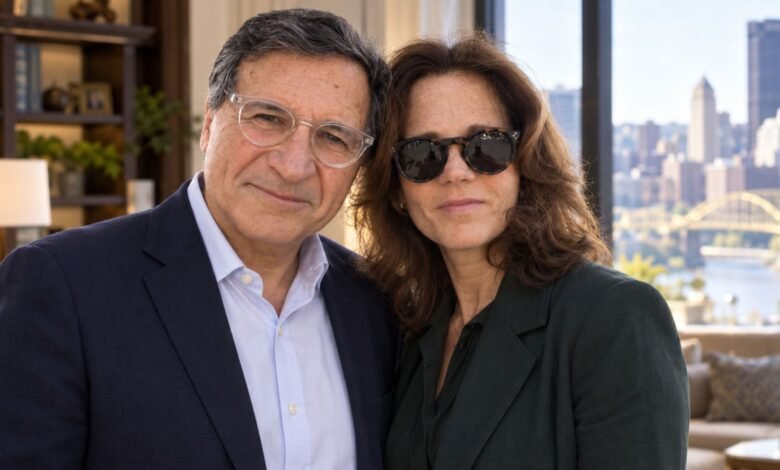
The name Lou Weiss has become increasingly searchable for a reason that has little to do with carpets: his daughter, Bari Weiss, is now editor-in-chief of CBS News. Paramount announced in October 2025 that it had acquired The Free Press and that Weiss would join CBS News as editor-in-chief, and CBS continued to identify her in that role during 2026.
But reducing Lou to “Bari Weiss’ father” leaves out the more interesting record. He built much of his adult life around Pittsburgh, worked in the family home-furnishings business, wrote opinion pieces, developed property, participated in Jewish communal life and raised four daughters with his wife, Amy. Kenyon College’s alumni magazine also records an unusually broad post-college career spanning carpet sales, business ownership, real estate development, television commercials and newspaper opinion writing.
His story also helps explain the environment in which Bari Weiss grew up: a Squirrel Hill household where religion, argument, books, business and politics were all part of ordinary family life. Contemporary profiles describe the Weiss home as a place of frequent debate, while family and community sources portray Lou as a highly involved Pittsburgh Jewish community figure.
BLUF: Lou Weiss is a Pittsburgh-based businessman, former carpet-sales executive, real estate developer and newspaper opinion contributor best known publicly as Bari Weiss’ father. He attended Kenyon College, raised four daughters with Amy Weiss, remained active in Pittsburgh Jewish life and has written on politics, privilege, Israel and community affairs.
Lou Weiss at a glance: the facts behind the search
| Detail | Verified information |
|---|---|
| Full name | Lou Weiss |
| Best-known family connection | Father of journalist and CBS News editor-in-chief Bari Weiss |
| Birthplace | Pittsburgh, Pennsylvania |
| Current public age reference | 70, according to a September 2026 StandWithUs profile |
| College | Kenyon College |
| Kenyon graduation | 1978 |
| Kenyon major | Drama |
| Main professional identity | Carpet salesman and businessman |
| Other documented work | Real estate development, television commercials, newspaper opinion writing |
| Wife | Amy Weiss |
| Children | Four daughters: Bari, Casey, Molly and Suzy |
| Long-term home base | Squirrel Hill, Pittsburgh |
| Family business | Weisshouse / family carpet and home-furnishings business |
| Public writing | Wall Street Journal and Pittsburgh-area opinion journalism |
| Personal net worth | No authoritative public figure verified |
The age figure comes from a September 8, 2026 StandWithUs event profile, which describes Lou as 70. A precise birth date was not established in the authoritative sources reviewed for this article.
The Pittsburgh family business that put carpets at the centre of his career
Lou Weiss’ working life is tightly connected to Weisshouse, the Pittsburgh home-furnishings business that grew out of The Modern Curtain and Rug Company, founded in 1943.
Retail industry reporting in The Retail Observer described Lou and his sister Stacy as the next generation of the business after their father, Jack Weiss, who had acquired the store in the 1960s. By the mid-1990s, Lou and Stacy had taken over ownership and the company was operating under the Weisshouse name.
A later obituary for Jack Weiss, published by the Pittsburgh Post-Gazette and reproduced by Associated Artists of Pittsburgh, provides a family-level account of the transition. Lou described his father as a self-made Pittsburgh businessman, and the obituary identifies Lou as one of the children who worked in the business for decades.
That family history matters because online biographies sometimes make Lou sound like an executive who appeared fully formed outside the business. The documentary trail is more grounded. His career was tied to an established family enterprise in carpets and home furnishings, and the business itself evolved across generations.
Today, Weisshouse remains a Pittsburgh retail company offering furniture, carpet, area rugs, lighting, kitchens and interior-design services. Its current website lists 324 South Highland Avenue, Pittsburgh, while the company’s LinkedIn profile identifies Stacy Weiss as president and owner. That indicates the present-day operating structure is different from the period when Lou and Stacy jointly ran the company.
There is also a useful detail in Lou’s own Kenyon profile: he said he had spent most of the previous 40 years selling carpet while also raising children and volunteering. That description places the trade at the centre of his identity rather than treating it as a footnote.
Kenyon College, 1978, and the political education that changed his outlook
Before becoming a businessman and opinion writer, Lou attended Kenyon College, graduating in 1978 with a major in drama. Kenyon’s alumni magazine says that, while he was a student, he regularly submitted letters to the editor of The Kenyon Collegian and sparked debates on campus.
That detail offers an important clue about his later public writing.
Lou did not suddenly become interested in arguments once his daughter became famous. The college record shows that writing, disagreement and public persuasion were already part of his habits as a young man.
He has also described a political evolution during his college years. In Kenyon’s 2022 alumni profile, he said a political-science class with professor John Agresto changed his outlook and that he entered the course as a liberal and left as a “bleeding heart” conservative. He separately described himself as an “ardent Zionist.”
A 2020 profile in Moment similarly described him as having grown up in a Reform Jewish family in Pittsburgh before moving toward conservative politics in college. The magazine listed him as a retired former operator of the family carpet business and noted his continuing activity as an occasional Wall Street Journal opinion contributor.
His political identity should therefore be understood as self-described and documented, not as something inferred from his daughter’s career.
The distinction matters. Bari Weiss has developed her own political and journalistic profile over many years. Lou’s record is his own: a Pittsburgh businessman who became increasingly active as an opinion writer and community voice.
A father who turned the dining table into a place for arguments
The family story becomes more revealing when Amy Weiss enters it.
Bari grew up as the eldest of four daughters, with sisters Casey, Molly and Suzy. Multiple profiles describe the family as deeply rooted in Pittsburgh’s Squirrel Hill neighbourhood and in Jewish community life.
The family’s political differences were not hidden.
Vanity Fair reported that Lou was conservative while Amy identified as liberal, and described a home where disagreements over public affairs were routine. The New Yorker later reported that Shabbat dinners could involve intense debate, with Bari’s sister Casey recalling that arguments sometimes became heated.
That is one of the clearest threads connecting Lou’s biography to Bari’s childhood.
Books were treated as serious business in the Weiss household. According to Vanity Fair, Lou and Amy encouraged Bari to keep journals and offered her money for reading books and writing reports. When she misbehaved, writing a long apology was used as a form of discipline.
The New Yorker similarly described a household where discussion, religion, books and political disagreement were common. Bari grew up attending Jewish institutions in Squirrel Hill, and the family maintained a strong relationship with Jewish communal life.
It would be too simplistic to say Lou “made” Bari a journalist. The evidence does not establish such a direct cause-and-effect relationship.
What it does establish is something more concrete: Bari grew up in a household where writing was encouraged, argument was normal and political disagreement existed inside the family itself.
The Tree of Life connection changed the meaning of the Weiss family story
For Lou and his family, Pittsburgh’s Tree of Life synagogue was not merely a name associated with national news.
Bari Weiss had her bat mitzvah there. The synagogue complex later became the scene of the October 2018 mass shooting that killed 11 worshippers. Bari wrote about the aftermath for The New York Times, and the attack became a major reference point in her public writing about antisemitism.
Lou also had a direct connection to the community surrounding the synagogue and wrote publicly following the attack. The Pittsburgh Post-Gazette identified him in coverage of responses to the massacre as a longtime Pittsburgh Jewish-community member and as Bari Weiss’ father.
The significance is personal as well as journalistic.
A Father’s Day tribute published by the Pittsburgh Jewish Chronicle in 2021 featured a contribution from Bari and her three sisters. They described Lou as a Pittsburgh carpet salesman who devoted substantial time to helping people, writing recommendations, organising fundraisers and supporting causes they considered important. They also described him as a strong supporter of Israel and Pittsburgh’s Jewish community.
That family account provides something many online biographies lack: a description of Lou from the people who knew him most closely.
Lou Weiss as an opinion writer, not just a businessman
Lou’s public profile expanded beyond the showroom.
The Wall Street Journal maintains an author page for an essay by Lou titled “Privileged? Check.” The article was written under the byline “Lou Weiss” and identifies him as a carpet salesman. Its subject was the cultural debate around privilege and the pressure to publicly acknowledge one’s advantages.
His newspaper writing also extended into Pittsburgh community affairs.
In 2017, the Pittsburgh Jewish Chronicle interviewed Lou over the debate about Syrian refugees and Jewish efforts to assist their resettlement. He expressed strong concerns about immigration policy and about the consequences he believed could follow from admitting refugees from certain parts of the world. The remarks were part of a broader debate in Pittsburgh’s Jewish community at the time.
The New Yorker has also reported that Lou frequently contributed opinion pieces to Pittsburgh newspapers and that his political outlook focused on free markets and support for Israel.
His writing matters to the biography because it demonstrates that Lou was not simply a private businessman whose name became searchable through his daughter. He had a documented public voice of his own.
Lou Weiss’ public record is best understood as that of a Pittsburgh businessman and community participant who also chose to write publicly about culture, politics, Israel, privilege and local affairs.
Beyond carpets: real estate, television and an unexpected cannabis-business chapter
Lou’s professional record is broader than one occupation.
Kenyon’s alumni magazine lists him as having worked as a carpet salesman, business owner, real estate developer and actor in television commercials, as well as an op-ed contributor.
That same profile contains one of the more unusual details in his biography: Lou said he helped assemble a team that won a Pennsylvania medical-marijuana growing licence, despite saying he had never used marijuana or even beer.
There is a useful pattern here. Lou’s career does not read like a straight corporate résumé. It moves between the family business, property development, writing, community organisations and occasional commercial ventures.
His connection to the family’s real-estate interests is also supported by reporting around his father, Jack Weiss, whose career included property development. The family’s business history therefore extended beyond carpet retail into real estate and other investments, although the public record does not provide a detailed consolidated account of Lou’s personal holdings.
His relationship with Amy Weiss has lasted across decades of public disagreement
Lou and Amy Weiss have remained together for decades.
A 2021 Pittsburgh Jewish Chronicle Father’s Day tribute from their daughters said the couple had been married for 41 years. In a 2022 Kenyon profile, Lou described his partnership with Amy as lasting 47 years. The different references reflect different points in time rather than necessarily a contradiction.
The marriage is particularly notable because their public political descriptions differ.
Amy has been described in major profiles as a liberal or moderate liberal Democrat, while Lou has publicly described his own movement toward conservatism. The New Yorker reported that their political differences were part of ordinary family life.
Yet the available family reporting consistently presents the couple as partners in raising four daughters and in participating in Pittsburgh community life.
That combination — disagreement without an obvious collapse of family identity — is one of the most frequently recurring details in reporting on the Weiss household.
Why Bari Weiss’ rise keeps bringing her father back into public view
For years, the usual search question was simple: Who is Bari Weiss’ father?
That question has gained a new layer of significance since 2025.
Paramount announced on October 6, 2025 that it was acquiring The Free Press and that Bari Weiss would become editor-in-chief of CBS News. CBS subsequently published multiple 2026 announcements identifying her in that role, including its January announcement of new contributors and later news-division appointments.
As Bari’s institutional profile expanded, curiosity about her upbringing naturally widened. But the evidence suggests that Lou’s importance is not simply genealogical.
He represents the Pittsburgh side of the Weiss story: a family business, Squirrel Hill, Jewish communal life, vigorous argument at home, newspaper commentary and a long relationship with local institutions.
That context is repeatedly visible in biographies of Bari herself. The Pittsburgh Jewish Chronicle has described her as the daughter of community stalwarts Amy and Lou Weiss, while later national profiles have returned to her childhood home and family debates when explaining her career.
Related Deeply News reading
For another documented profile of a private parent whose life is largely known through a more famous child, see Robert Joseph Karp: Alex Karp’s Father Revealed.
For a wider look at the challenges of reconstructing the lives of lesser-known parents, see Robert Witt and Diane Witt: The Private Parents Behind Alicia Witt.
Another comparable family biography is Roy Broadbent and Doreen Broadbent: Jim Broadbent’s Parents.
The timeline that connects Lou Weiss’ business, writing and family life
| Period | Documented development |
|---|---|
| 1943 | The business that became part of the Weiss family story began as The Modern Curtain and Rug Company in Pittsburgh. |
| 1960s | Jack Weiss acquired the business and eventually developed it into a major family enterprise. |
| 1974–1978 | Lou attended Kenyon College, graduating in 1978 with a drama major. |
| Post-1978 | Lou built a career in carpets and family business, with additional work in real estate development, television commercials and journalism. |
| Mid-1990s | Lou and sister Stacy became owners of the family business, which operated under the Weisshouse name. |
| 2017 | Lou was publicly quoted by the Pittsburgh Jewish Chronicle during debate over Syrian refugee resettlement. |
| 2018 | Lou wrote about the Tree of Life attack, an event with direct personal and communal significance. |
| 2021 | Bari, Casey, Molly and Suzy published a Father’s Day tribute describing Lou’s work and community involvement. |
| 2022 | Kenyon profiled Lou as a longtime carpet salesman, father, community volunteer and opinion writer. |
| 2024 | The Pittsburgh Jewish Chronicle continued to identify Lou publicly as a Pittsburgh carpet salesman and opinion writer. |
| September 2026 | StandWithUs listed Amy and Lou Weiss as honorees at a Pittsburgh event and described Lou as 70. |
| 2025–2026 | Bari Weiss’ appointment as CBS News editor-in-chief increased national interest in her family background. |
Lou Weiss’ financial record is far less public than his daughter’s
There is no authoritative public figure for Lou Weiss’ personal net worth in the sources reviewed for this profile.
That absence matters because celebrity-adjacent websites often publish precise numbers for parents of famous figures without showing how those estimates were calculated. The available evidence does not justify assigning Lou a personal fortune.
The public record confirms substantial professional activity: he worked for decades in carpet sales, participated in ownership of the family business, worked in real estate development and was involved in other ventures. But none of those facts produces a reliable personal balance-sheet figure.
The current Weisshouse website also does not publish a corporate valuation or disclose Lou’s personal ownership stake, while its present corporate profile identifies Stacy Weiss as president and owner.
| Financial question | What can responsibly be said |
|---|---|
| Lou Weiss net worth | Not publicly verified |
| Annual salary | Not publicly verified |
| Personal investment portfolio | Not publicly disclosed |
| Real-estate holdings | Publicly described as part of his professional activity, but no complete personal asset list verified |
| Weisshouse valuation | No authoritative public figure established |
| Family-business role | Documented across multiple decades |
| Exact personal wealth ranking | Not established |
The responsible biography therefore leaves the number blank rather than turning family-business history into an invented net-worth estimate.
People Also Ask about Lou Weiss
Who is Lou Weiss?
Lou Weiss is a Pittsburgh businessman, longtime carpet salesman, former family-business owner, real estate developer and opinion contributor who is best known nationally as the father of journalist Bari Weiss. Kenyon College identifies his post-college career as spanning carpet sales, business ownership, real estate, television commercials and newspaper writing. He has remained closely connected to Pittsburgh and its Jewish community.
Is Lou Weiss Bari Weiss’ father?
Yes. Lou Weiss is Bari Weiss’ father, and Amy Weiss is her mother. Bari is the eldest of four daughters in the family, with sisters Casey, Molly and Suzy. Multiple Pittsburgh and national profiles identify Lou and Amy as central figures in her Squirrel Hill upbringing.
How old is Lou Weiss?
Lou Weiss is listed as 70 years old in a September 2026 StandWithUs profile for a Pittsburgh community event. A precise date of birth was not verified in the stronger sources reviewed, so an exact birth date should not be presented as established fact.
What does Lou Weiss do?
Lou Weiss has spent much of his professional life in the carpet and home-furnishings business. Kenyon also records work in real estate development, television commercials and opinion journalism. Earlier reporting describes him as part of the family ownership team behind Weisshouse, the Pittsburgh furnishings company associated with the Weiss family.
Does Lou Weiss have a verified net worth?
No. Lou Weiss does not have a reliably documented public net-worth figure in the authoritative sources reviewed for this article. His business history is documented, but precise personal assets, investments and liabilities are not publicly disclosed in a way that would support a defensible calculation.
What is Lou Weiss known for besides being Bari Weiss’ father?
Lou is known for several things independently of his daughter: decades in Pittsburgh’s carpet business, involvement in real estate development, community activity, Jewish communal leadership and opinion writing. His published work includes a Wall Street Journal essay and commentary on Pittsburgh and Jewish community issues.
The father behind the public biography is more complicated than the search label
Lou Weiss is easy to flatten into a single phrase: Bari Weiss’ father.
The record does not support such a narrow portrait.
He is a Pittsburgh businessman shaped by a multigenerational family enterprise, a Kenyon graduate whose interest in argument predated his daughter’s career, a husband whose politics differed from his wife’s, a father who encouraged reading and writing, a community participant with longstanding Jewish ties and an opinion writer who entered public debates under his own name.
The most revealing sources are not the anonymous biography pages that attempt to attach a fortune or an elaborate personal backstory to him. They are the institutional and contemporary records: Kenyon’s alumni profile, The Wall Street Journal, the Pittsburgh Jewish Chronicle, Pittsburgh newspaper reporting and current community material.
Taken together, they show a life that is substantial without needing celebrity embellishment.
Lou Weiss did not become notable because his daughter eventually entered the centre of American media. He was already a businessman, writer, husband, father and Pittsburgh community figure long before the search term “Bari Weiss’ father” became a recurring question.
Editorial Disclaimer
This article distinguishes verified facts, documented public statements and attributed reporting from estimates or inference. Lou Weiss is a private individual compared with his daughter, and several personal details commonly repeated online—including an exact birth date and personal net-worth figure—could not be reliably verified from authoritative sources. No unsupported financial estimate or private personal information has been presented as fact.



One Comment