Suzy Lee Weiss: How Bari Weiss’ Sister Turned a Viral College Rejection Into a Media Career
At 17, Suzy Lee Weiss became an internet-wide punchline and controversy magnet; more than a decade later, the same writer is helping shape one of America’s most closely watched independent media companies.

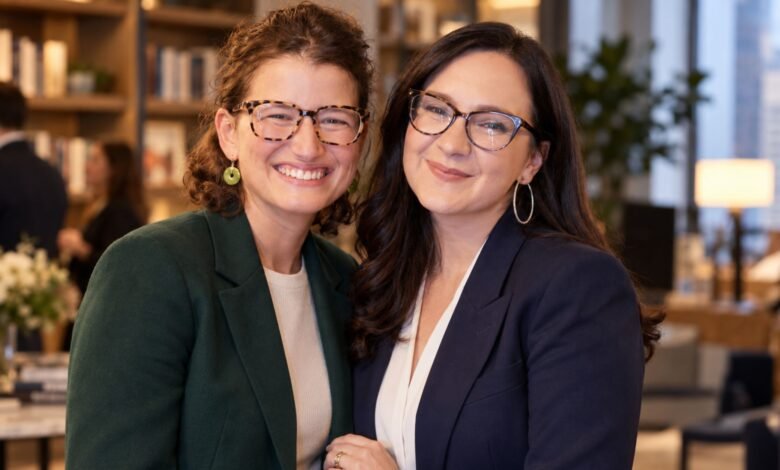
Suzy Lee Weiss first entered the national conversation as a teenager from Pittsburgh whose Wall Street Journal essay about elite college admissions spread far beyond the audience it was written for. The piece was funny, angry, deliberately provocative and intensely personal, and it quickly turned its teenage author into a national media story.
That episode might have remained a single viral moment. Instead, it became the first visible chapter of a journalism career. Weiss later worked at the New York Post, wrote for several publications and eventually became a co-founder and reporter at The Free Press, the media company founded by her older sister, Bari Weiss. She is also the host of the culture-focused podcast Second Thought.
The family connection explains much of the search interest around her. Bari Weiss is now a nationally prominent journalist and editor, but Suzy has developed a professional identity of her own, particularly in culture, internet trends, media and contemporary social behaviour. Current Free Press material shows her publishing regularly in September 2026, including work dated September 4 and September 11.
Suzy Lee Weiss is an American writer, reporter, and co-founder of The Free Press; she is best known publicly as Bari Weiss’ younger sister and for her 2013 Wall Street Journal college-admissions essay, and she now hosts Second Thought while writing about culture and media.
Suzy Weiss at a Glance: The Details That Survive the Internet’s Noise
- Full name: Suzy Lee Weiss
- Parents: Lou Weiss, Amy Weiss
- Known for: Writing, reporting, cultural commentary and podcasting
- Current organisation: The Free Press
- Current role: Co-founder and reporter
- Podcast: Second Thought
- Previous employer: New York Post, where she worked as a features reporter
- Education: University of Michigan, Stephen M. Ross School of Business, 2014–2018, according to her LinkedIn profile
- Family connection: Bari Weiss is her older sister; The New Yorker has described Suzy as Bari’s youngest sister.
The most important distinction is that “Bari Weiss’ sister” is a relationship description, not Suzy Weiss’s profession. Her own public work now provides a substantial record independent of that family connection.
The 2013 Essay That Made Suzy Lee Weiss a National Story
The story begins in Pittsburgh.
In 2013, Weiss was a senior at Taylor Allderdice High School. CBS Pittsburgh reported that she had a 4.5 GPA, a 2120 SAT score and experience as a United States Senate page. Yet she had been rejected by several universities she hoped to attend, including Harvard, Yale, the University of Pennsylvania and Vanderbilt.
Rather than writing a conventional account of disappointment, she produced a satirical Wall Street Journal opinion piece titled “To (All) the Colleges That Rejected Me.” The essay attacked what she viewed as the increasingly elaborate demands of selective admissions, especially the emphasis on extracurricular credentials and diversity-related considerations.
The article travelled quickly through the early-2010s internet.
The Washington Post reported that the column triggered a major Twitter reaction almost immediately. CBS Pittsburgh later documented that Weiss appeared on the Today show after the article became nationally discussed.
The episode also established a pattern that would become more relevant later in her career: Weiss was comfortable writing in a highly personal voice about subjects where institutional language usually dominates.
She was not writing as an admissions officer or academic researcher. She was writing from the perspective of an ambitious teenager who believed the rules she had been given did not match the rules she believed she encountered.
That distinction is central to understanding the piece.
Bari Weiss’ role in the story was surprisingly practical
The family connection was not simply a later media association.
A New York Times profile reported that Suzy’s complaints about college rejection were met by her sister Bari with laughter and a suggestion that she write the material down. The result eventually became the Wall Street Journal essay that made Suzy famous online.
The Pittsburgh Jewish Chronicle similarly reported that Suzy wrote the essay after advice from her sister, who was already working for the Journal.
That small detail matters because it illustrates the early division between the two sisters’ careers. Bari was already building a professional identity inside journalism. Suzy was still a high-school student discovering that her personal voice could itself become publishable material.
The Viral Fame Was Not Quite the Prize It Looked Like
Being 17 and suddenly highly visible on the internet was not the same thing as becoming established.
In a later Free Press essay, Weiss described herself as an early casualty of what she called cancel culture and recalled how the college essay generated a huge volume of hostile online reaction. She also wrote that she appeared on the Today show hoping she would not have to revisit the episode again.
That expectation did not hold.
More than a decade later, the episode still formed part of her professional biography. In a 2025 interview with Max Raskin, Weiss spoke about going viral at 17 and remembered the Today appearance as an overwhelming experience.
Her later reflections add an important layer to the original story. The 2013 essay is often remembered primarily as a controversy about college admissions. Weiss herself has increasingly used it as evidence of what happens when a very young writer becomes the subject of an internet pile-on before she has developed the distance or professional infrastructure to handle it.
Her 2025 essay was therefore partly retrospective: the teenager who once experienced internet notoriety had become a journalist writing about how internet notoriety works.
From Taylor Allderdice to Michigan and a Journalism Career
The next stage was less dramatic and more consequential.
Weiss attended the University of Michigan from 2014 to 2018, according to her current LinkedIn profile. The profile lists the Stephen M. Ross School of Business and identifies several campus activities, including work with The Every Three Weekly, the Hillel Players and a culture-focused Hillel group. It also lists a publication record dating to her university years.
Her writing did not stop after the 2013 episode.
The LinkedIn record lists pieces in the Wall Street Journal and Pittsburgh Post-Gazette during her student years. By the time she entered professional journalism more fully, the early viral article was no longer her only published work.
The Free Press’s current author biography gives the clearest summary of her subsequent career: she worked as a features reporter at the New York Post covering the internet, culture, dating, dieting, technology and Gen Z. It also identifies bylines in Tablet, the New York Daily News, the Wall Street Journal and McSweeney’s Internet Tendency.
That subject mix is revealing.
It is broad, but the common thread is culture as lived experience: online behaviour, dating, youth culture, consumer trends, entertainment, social expectations and the strange corners of the internet.
The later Suzy Weiss is therefore much easier to classify as a culture journalist than as simply “Bari Weiss’s sister.”
The Free Press Is Where the Family Connection Became a Professional One
When Bari Weiss launched the publication that became The Free Press, Suzy Weiss was not merely a relative standing nearby.
She became part of the operation.
The New York Times reported that Bari co-founded The Free Press with Nellie Bowles and her sister Suzy Weiss. Axios also identifies Suzy as a co-founder when describing the publication’s development after Bari’s 2021 launch of Common Sense and its transformation into The Free Press in 2022.
That structure is significant because The Free Press has moved beyond the scale of a personal newsletter. By 2025, Axios was reporting on its expanding contributor roster, subscriber base, events and business development.
Suzy’s role within that organisation has also become increasingly visible.
The Free Press currently describes her as a co-founder and reporter, while also identifying her as the host of Second Thought.
The podcast focuses on popular culture, internet behaviour, television, books, celebrities, social trends and the subjects people are discussing online. The programme’s official description says it is intended to translate cultural shifts across generations while examining what audiences are watching, arguing over or quietly obsessing over.
In September 2026, her output remains active rather than archival. The Free Press currently lists her work on subjects ranging from Anna Wintour and fashion to Hunter Biden’s meme coin, Burning Man, Ariana Grande, Taylor Swift and contemporary television.
What Suzy Weiss actually covers
Her bylines show an unusually wide editorial range:
| Period | Organisation / Outlet | Documented focus |
|---|---|---|
| 2013 | The Wall Street Journal | College admissions and youth culture |
| 2014–2018 | University of Michigan / student publications | Campus writing and culture |
| University years | Wall Street Journal / Pittsburgh Post-Gazette | Culture and social commentary |
| Professional career | New York Post | Internet, dating, dieting, technology and Gen Z |
| 2022 onward | The Free Press | Culture, media, internet and social trends |
| Current | Second Thought | Popular culture, television, celebrity and online life |
This timeline is supported primarily by Weiss’s current professional profile, her LinkedIn record and contemporary reporting about her career.
Why “Bari Weiss’ Sister” Still Dominates Search
There is a simple reason the phrase remains useful: Bari’s profile is considerably larger.
Bari Weiss founded The Free Press, hosts Honestly, has written a bestselling book on antisemitism and, by 2026, is serving as editor-in-chief of CBS News. Her own website describes those roles, while major reporting has documented the expansion of her media career.
That scale of public attention naturally pulls relatives into the search ecosystem.
Yet Suzy’s profile has its own identifiable markers: a nationally reported viral essay at 17, a University of Michigan education, New York Post reporting, The Free Press bylines and Second Thought. Those details are enough to establish a career narrative without borrowing significance from Bari.
This distinction is also useful when reading other celebrity-family biographies. Deeply News has explored similar situations involving subjects whose public identity is often reduced to a famous relative, including Charlie John Oldman, Paula Sutor and Donya Fiorentino. The same editorial principle applies: family connection should establish context, not replace the subject’s documented work.
Deeply News — Charlie John Oldman profile
Deeply News — Paula Sutor profile
Deeply News — Donya Fiorentino profile
A Career Built Around the Things People Argue About Online
One of the strongest through-lines in Weiss’s work is the internet itself.
At the New York Post, she reportedly covered the digital world alongside culture, dating, technology and Gen Z. In her later Free Press work, she continued examining online behaviour, celebrity culture and the gap between what people say publicly and what they actually consume or discuss privately.
In a 2025 interview, she described her information habits as a mixture of phone, laptop and Slack and discussed spending time in unconventional internet communities as part of her reporting interests.
Her own explanation of that work was unusually direct: she said the fringes can reveal something about the middle.
That idea helps explain why her subject list can move abruptly from celebrities and television to internet subcultures and social behaviour. The apparent variety is connected by a common question: what do people’s obsessions reveal about the culture around them?
The journalist became part of the subject
There is an unusual feedback loop in Suzy Weiss’s career.
She became famous because she wrote about herself.
She later wrote about internet fame.
She now interviews or comments on public figures, entertainment and online communities while carrying the memory of having once been the person under the microscope.
Her 2025 essay about her 2013 experience makes that especially clear. The teenage Suzy became an object of online attention; the adult Suzy became a journalist studying how attention, shame and digital identity operate.
That is a more substantial story than the original viral controversy alone.
What Is Known About Suzy Weiss’ Personal Fortune?
Authoritative public sources reviewed for this profile do not establish Suzy Weiss’s personal net worth, salary, property holdings or investment portfolio.
Her professional position at The Free Press is documented. Her personal compensation is not.
That distinction matters because online celebrity sites frequently publish numerical net-worth estimates without showing audited records, contracts, tax filings or other primary documentation. No sufficiently authoritative source reviewed for this article provides a verified figure that should be presented as fact.
The same caution applies to The Free Press itself. Reporting has discussed the publication’s valuation, subscribers and business growth, but those figures describe the company rather than Suzy Weiss’s personal balance sheet. Axios, for example, reported on the company’s fundraising and valuation in 2025, while The Washington Post discussed the publication’s financial position and subscriber economics in its reporting on Bari Weiss.
For now, Suzy Weiss’s personal net worth and salary are unverified in authoritative public reporting.
The Timeline Behind the Search Term
2013 — National attention: At 17 and still at Taylor Allderdice High School in Pittsburgh, Weiss published “To (All) the Colleges That Rejected Me” in the Wall Street Journal.
2013 — Television appearance: The essay generated enough attention for Weiss to appear on NBC’s Today show.
2014–2018 — University of Michigan: Her LinkedIn profile lists the Stephen M. Ross School of Business and several campus activities during these years.
Mid-to-late 2010s — Journalism expands: Her published work includes outlets such as the Wall Street Journal and Pittsburgh Post-Gazette, while her professional career develops toward reporting and features.
New York Post era: The Free Press identifies her previous work as a features reporter covering internet, culture, dating, dieting, technology and Gen Z.
2022 — The Free Press: Suzy joins Bari Weiss and Nellie Bowles as a co-founder of the publication that evolved from Bari’s Common Sense project.
2024–2025 — Broader public profile: Her bylines and podcast appearances increasingly position her as a culture journalist rather than solely a reporter known for the 2013 college essay.
2026 — Current work: The Free Press continues to publish her work and identifies her as a co-founder, reporter and host of Second Thought.
“I was an early casualty of cancel culture.”
That line comes from Weiss’s own 2025 retrospective about the controversy surrounding her teenage essay. It offers a useful window into how she now frames the event that first made her famous.
Frequently Asked Questions About Suzy Lee Weiss
Who is Suzy Lee Weiss?
Suzy Lee Weiss is an American journalist, writer and media personality. She is a co-founder and reporter at The Free Press and hosts the culture podcast Second Thought. Before joining The Free Press, she worked as a features reporter at the New York Post and published work in several other outlets.
Is Suzy Weiss Bari Weiss’ sister?
Yes. Suzy Weiss is Bari Weiss’s younger sister, and reporting has described her as Bari’s youngest sister. The two later became professional collaborators when Suzy joined Bari Weiss and Nellie Bowles as a co-founder of The Free Press.
What happened to Suzy Lee Weiss in 2013?
In 2013, Suzy Lee Weiss was a 17-year-old Pittsburgh high-school senior whose Wall Street Journal essay, “To (All) the Colleges That Rejected Me,” went viral. The piece criticised aspects of elite college admissions and generated substantial national media attention, including an appearance on the Today show.
Where did Suzy Weiss go to college?
Suzy Weiss attended the University of Michigan. Her current LinkedIn profile lists the Stephen M. Ross School of Business and dates her education there from 2014 to 2018. The profile also records campus activities and publications during her university years.
What does Suzy Weiss do now?
Suzy Weiss is currently a co-founder and reporter for The Free Press and the host of Second Thought. Her recent work covers culture, celebrities, television, internet behaviour, media and social trends, with new material appearing through September 2026.
What is Suzy Weiss’ net worth?
Suzy Weiss’s personal net worth is not reliably established in authoritative public sources reviewed for this article. Her employment and media roles are public, but no verified personal balance sheet, salary figure or audited wealth estimate has been published by a sufficiently authoritative source.
The More Interesting Story Is What Happened After the Viral Moment
Suzy Lee Weiss remains searchable because of a teenage essay, but the essay is no longer the whole biography.
At 17, she became famous for saying what she thought about elite college admissions. In her twenties, she developed formal experience in journalism, including work at the New York Post and other publications. In adulthood, she became a co-founder of The Free Press and a host of Second Thought, building a career around culture, media and internet life.
The phrase “Bari Weiss’ sister” will probably remain attached to her name because family relationships are a powerful search signal. But it is incomplete.
Suzy Weiss has her own published archive, her own reporting history and her own media role.
The most defensible biography is therefore neither the viral teenager nor the famous sister.
It is the writer who experienced the internet at its harshest, learned how attention works from the inside, and eventually made that experience part of a broader professional career in journalism.
Editorial Disclaimer
This profile reflects publicly available information reviewed through September 2026. Suzy Weiss’s professional roles and published work are substantially better documented than her private life or personal finances. Where reliable primary or high-quality secondary evidence was unavailable, specific claims, estimates and personal details have been excluded rather than presented as fact.



One Comment