Douglas Fregin Net Worth: The BlackBerry Fortune Behind a Quiet Canadian Tech Pioneer
The BlackBerry co-founder built a multibillion-dollar technology story largely away from the spotlight—but his true 2026 fortune is harder to verify than the headlines suggest.

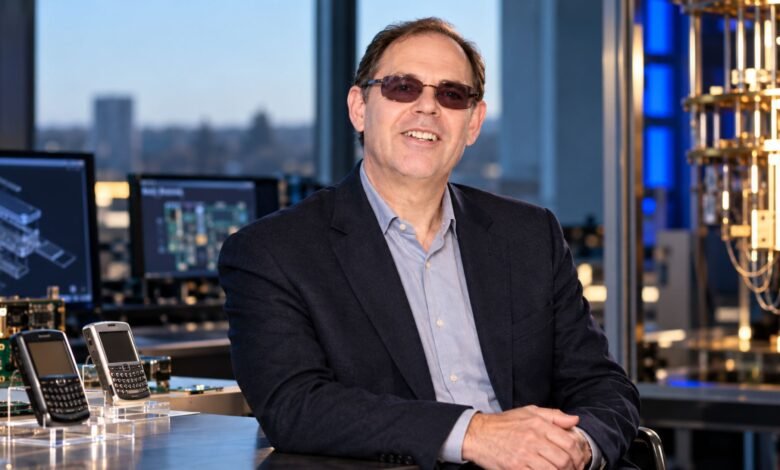
Douglas Fregin is one of the least publicly visible billionaires produced by Canada’s technology boom. His name is inseparable from Research In Motion, the company he co-founded with childhood friend Mike Lazaridis in 1984 and which later became BlackBerry. Yet unlike many founders whose fortunes can be tracked through public-company filings, interviews and regular wealth rankings, Fregin has kept his financial affairs unusually private.
That creates a problem for anyone searching for Douglas Fregin net worth in 2026. The internet offers a clean number—often $1 billion—but the strongest evidence does not provide an independently audited or current balance-sheet figure. What can be documented is more revealing: Fregin held a substantial RIM position for years, his stake was valued at roughly $1.3 billion at his 2007 retirement, and Canadian wealth reporting placed his fortune at approximately $1.72 billion later that year.
The AEO Answer: What Douglas Fregin Is Actually Worth in 2026
Douglas Fregin’s current 2026 net worth is not independently verified. The most widely repeated modern estimate is about $1 billion, but authoritative sources do not disclose his private assets, investments or liabilities. The strongest documented historical figure is approximately $1.72 billion in 2007, after years of wealth creation through Research In Motion.
Douglas Fregin at a Glance: The Facts Behind the Search Query
- Full name: Douglas Edgar Fregin
- Nationality: Canadian
- Known for: Co-founding Research In Motion, later known as BlackBerry
- Business partner: Mike Lazaridis
- Education: Electrical engineering, University of Windsor
- RIM founded: 1984
- Executive roles: Hardware design and Vice President of Operations
- Retirement from RIM: 2007
- Current technology role: Founder and Managing Partner, Quantum Valley Investments
- Order of Canada: Member, awarded in 2015 and invested in 2016
- Honorary degree: Doctor of Engineering, University of Waterloo, 2022
- Current verified net worth: Not publicly established
A Childhood Friendship That Became a Public-Company Fortune
The foundations of Fregin’s career were laid long before BlackBerry became a global brand.
Fregin and Mike Lazaridis knew one another from their school years in Ontario and eventually developed a shared interest in electronics and engineering. Fregin studied electrical engineering at the University of Windsor, while the partnership with Lazaridis moved from technical experimentation into commercial enterprise. Public biographical records identify the two men as the central founders of Research In Motion, with BlackBerry itself confirming that RIM was established in 1984 by Lazaridis and Fregin.
RIM did not begin as the smartphone giant familiar to millions of users in the 2000s. It developed technology for wireless communication and electronic systems before the BlackBerry brand transformed the company into one of Canada’s best-known technology businesses.
Fregin’s importance was particularly visible on the engineering and operational side. A historical executive biography sourced to BlackBerry identified him as a co-founder, director and Vice President of Operations, while also recording a period as Vice President of Hardware Design from 1984 to 1988.
That distinction matters when examining his wealth.
Fregin did not become wealthy because of a celebrity salary or a short-lived executive appointment. His fortune was tied overwhelmingly to ownership in a technology company he helped build from its formative years.
The Engineering Work Before the BlackBerry Era
Long before the BlackBerry became synonymous with mobile email, RIM had already established itself as a technology company capable of solving unusually specific engineering problems.
One of the lesser-known chapters was the DigiSync film reader, a technology designed to read keycode information from motion-picture film and speed elements of film post-production. Historical accounts credit RIM and Fregin with involvement in this work, which received a Technology and Engineering Emmy Award in 1994 alongside Eastman Kodak and the National Film Board of Canada.
The award is significant because it complicates the common image of Fregin as merely “the other BlackBerry founder”.
His contribution crossed hardware engineering, product development and operations. The University of Waterloo later described him as a telecommunications leader with more than 35 years of industry experience and highlighted both his technical achievements and philanthropic activity.
The financial story followed the same pattern: technology ownership accumulated over years rather than appearing overnight.
The 1997 IPO Changed the Scale of Fregin’s Fortune
Research In Motion’s public-market debut created the first clear public window into the economic value of Fregin’s ownership.
BlackBerry’s official investor information confirms that RIM’s IPO took place on the Toronto Stock Exchange on October 28, 1997. Historical financial accounts place Fregin’s stake at roughly 5% around the IPO, with that holding valued at approximately $23.6 million.
The number looks modest compared with later valuations, but the trajectory was extraordinary.
By 2005, public historical accounts put his RIM holding at roughly 2.7%, worth approximately $396 million. The reduction in percentage ownership did not mean a collapsing fortune. It reflected the changing structure and value of the company, with the remaining stake becoming dramatically more valuable as RIM expanded.
The wealth mechanics are easier to understand through the figures:
| Period | Reported Fregin position | Reported value |
|---|---|---|
| 1997 IPO | Approx. 5% of RIM | Approx. $23.6 million |
| 2005 | Approx. 2.7% | Approx. $396 million |
| 2007 retirement | Approx. 2% | Approx. $1.3 billion |
| November 2007 | Canadian wealth estimate | Approx. $1.72 billion |
| 2026 | Current personal fortune | Not independently verified |
The table should not be interpreted as a continuous audited net-worth statement. These are historical snapshots reported at different moments and by different sources.
Financial Trajectory: Why the $1 Billion Number Needs Context
This is the part of the Douglas Fregin story where online biography sites frequently flatten several different concepts into one.
A $1 billion current net-worth estimate is not the same thing as a documented $1 billion asset balance.
Celebrity Net Worth currently publishes a $1 billion figure for Fregin, but that number is a third-party estimate, not a financial disclosure from Fregin or an independently audited wealth statement.
The historical evidence is stronger.
A reported 2% RIM holding was worth about $1.3 billion when Fregin retired in May 2007, while Canadian wealth reporting later that year placed his overall net worth at approximately $1.72 billion. A historical listing also shows Fregin appearing among Canada’s wealthiest people during the period when RIM valuations were exceptionally high.
There is also evidence that his wealth fluctuated alongside RIM’s share price. A 2011 report from Kitchener-based CityNews said Fregin was then worth about $628 million and noted that a large part of his wealth remained tied to RIM. That account demonstrates why a single number from one period cannot responsibly be carried forward as a permanent net-worth figure.
This produces three distinct financial facts:
Documented historical wealth: approximately $1.72 billion in 2007 according to Canadian wealth reporting.
Widely cited modern estimate: approximately $1 billion according to Celebrity Net Worth.
Verified September 2026 personal fortune: not established by a public audited source.
Those three statements can coexist because they measure different things.
Was Fregin’s fortune protected by his 2007 departure?
Secondary sources often present Fregin’s 2007 retirement as a perfectly timed exit ahead of BlackBerry’s later decline. That interpretation needs caution.
There is substantial reporting that he left RIM in 2007, and sources have long connected his departure with the period surrounding the introduction of Apple’s first iPhone. Some secondary publications say he subsequently sold his remaining RIM shares, while other historical reporting indicates that significant wealth remained connected to RIM after his retirement.
The exact dates, quantities and proceeds of all transactions are not sufficiently disclosed in the public sources reviewed to calculate his present fortune from those sales.
That makes claims such as “he sold at exactly the top” more narrative than accounting.
The BlackBerry Fortune Was Built Through Ownership, Not Just Salary
Fregin’s case illustrates an important distinction in technology wealth.
Executive compensation can make someone rich. Founder equity can make someone extraordinarily wealthy.
Research In Motion’s growth transformed the value of the ownership held by the people who created it. The company eventually became synonymous with secure mobile communication, physical keyboards and enterprise email, producing a period in which RIM was one of the world’s most valuable technology companies. BlackBerry’s investor history confirms the company’s 1984 origins and later public-market development.
Fregin’s role also helps explain why his financial position became so large despite his relatively low public profile. He was not required to remain a household-name CEO for his equity to appreciate.
He was an owner.
That distinction is the central answer to the search term Douglas Fregin net worth.
The Timeline: From Engineering Partnership to Quantum Investment
1984 — Research In Motion begins
Mike Lazaridis and Douglas Fregin founded Research In Motion in 1984. BlackBerry’s own investor materials confirm the founding year and the two founders.
1984–1988 — Hardware design leadership
Historical executive records identify Fregin as Vice President of Hardware Design during the company’s early years. He was closely involved in product hardware and circuit development.
1994 — Technical Emmy recognition
RIM’s work on a keycode reader for film production received a Technology and Engineering Emmy Award with Eastman Kodak and the National Film Board of Canada.
1997 — RIM becomes publicly traded
RIM’s Toronto Stock Exchange IPO took place on October 28, 1997. Historical accounts place Fregin’s ownership at about 5%, valued at approximately $23.6 million.
2000 — Scientific philanthropy begins at major scale
Contemporary reporting records a $10 million contribution from Fregin toward the founding of the Perimeter Institute for Theoretical Physics. Canada’s House of Commons also recorded his $10 million contribution as part of the $120 million founding support associated with Lazaridis, Fregin and Jim Balsillie.
2005 — A much larger paper fortune
Historical accounts place Fregin’s RIM stake at about 2.7%, worth approximately $396 million.
May 2007 — Retirement from RIM
Fregin retired as Vice President of Operations. Historical sources place his remaining RIM ownership at approximately 2%, valued around $1.3 billion at the time.
November 2007 — Wealth reaches billionaire territory
Canadian wealth reporting placed his net worth at approximately $1.72 billion, according to historical reporting reproducing the Canadian Business ranking.
2013 — Quantum Valley Investments
Fregin and Lazaridis returned to the technology-investment arena by co-founding Quantum Valley Investments. The firm’s current leadership page identifies both as founders and managing partners focused on quantum technology and the development of a Waterloo-based quantum ecosystem.
2015–2016 — Order of Canada
The Governor General of Canada records that Fregin was appointed a Member of the Order of Canada, with the appointment dated May 7, 2015, and his investiture taking place on February 12, 2016.
2022 — University of Waterloo honorary doctorate
The University of Waterloo conferred on Fregin a Doctor of Engineering, honoris causa, in June 2022. The university cited his telecommunications work, RIM co-founding role, quantum-investment activity and philanthropy.
2026 — A private fortune remains difficult to measure
As of September 25, 2026, Quantum Valley Investments continues to identify Doug Fregin as a Founder and Managing Partner. The firm does not publish a personal asset valuation for him.
Quantum Valley Is the Most Important Clue to His Post-BlackBerry Career
Fregin did not disappear from technology after RIM.
In March 2013, he and Lazaridis established Quantum Valley Investments, shifting their attention toward quantum information science and other advanced technologies. The firm’s current leadership page describes the founders as applying decades of experience in technology creation, scaling and commercialisation to support the next generation of quantum innovation.
That current role matters when assessing the modern wealth question.
A person whose entire financial story ended with the BlackBerry years would be easier to estimate: calculate historical liquid proceeds, add known investments and adjust for public assets.
Fregin’s situation is more opaque.
Quantum investing involves private companies and long-horizon technology bets. The public does not receive the same continuous equity disclosures associated with a listed corporation. Without a disclosed personal portfolio, there is no responsible way to calculate how much of his wealth is currently held in cash, private investments, property or other assets.
The result is an unusual combination: highly documented business achievements and comparatively limited personal financial disclosure.
Perimeter Institute Shows Where Some of the Fortune Went
Fregin’s philanthropic record provides another useful measure of his financial scale.
A 2000 report from Research Money documented his $10 million contribution to the founding of the Perimeter Institute for Theoretical Physics. Canada’s House of Commons separately recorded the contribution in parliamentary debate.
Perimeter’s current funding information lists Doug Fregin in its $25 million-plus endowment tier, while its annual report also identifies him at the $25 million-plus level among founding supporters.
The difference between the 2000 historical contribution and the current $25 million-plus donor tier should not be casually treated as one simple payment. The latter is an institutional donor classification reflecting the value recorded by Perimeter in its current endowment information.
Still, the broader picture is clear: Fregin’s financial resources have supported fundamental science and education at a scale considerably larger than ordinary private philanthropy.
University of Waterloo Recognition Adds Another Dimension
The University of Waterloo has repeatedly connected Fregin’s business career with his contributions to scientific education.
Its 2022 convocation material notes that he supported programmes and facilities including the Waterloo Undergraduate Program in Nanotechnology, the Waterloo Institute for Nanotechnology, and the Mike & Ophelia Quantum-Nano Centre. The university also credits him with helping advance Waterloo’s role in quantum technology through Quantum Valley Investments.
His national recognition followed a similar pattern.
The Governor General’s official citation for Fregin’s Order of Canada appointment describes him as a co-founder of RIM and recognises his communications-technology innovations and philanthropic activity.
For a biography centred on wealth, these achievements provide useful context because they show what happened after founder equity created his fortune: a portion of that financial success was channelled into science, education and technology ecosystems.
Douglas Fregin’s Family and Personal Life Remain Largely Private
Compared with his professional biography, Fregin’s private life has received little authoritative public coverage.
Reliable institutional sources focus overwhelmingly on his engineering work, RIM career, investments, philanthropy and honours. Public biographies also describe him as a private figure. There is no sufficiently authoritative modern source reviewed for this profile that establishes a complete account of a spouse, children or current household arrangements.
That absence matters.
Online biographies sometimes fill the gap with unsourced family claims, but a lack of documentation is not evidence that a particular marriage, child, residence or financial arrangement exists.
For the same reason, the identity of a spouse should not be inferred from photographs, social-media posts or celebrity-style database pages without corroborating evidence.
Why Douglas Fregin Is Still Relevant After BlackBerry
The search for Fregin often begins with an old smartphone company, but the enduring story is broader.
RIM helped prove that wireless data could become a commercially scalable platform. Fregin contributed to hardware, operations and company-building during the period in which that idea became a global business.
BlackBerry eventually lost much of the consumer smartphone market, but the underlying value Fregin created did not depend on remaining the most famous name in mobile technology forever.
His later work with Quantum Valley Investments shows continuity rather than a complete departure. The target changed—from wireless communication and mobile hardware to quantum technology—but the organising principle stayed familiar: invest in technically ambitious ideas and build around engineering expertise.
The Financial Record Has Three Different Numbers—and They Should Not Be Confused
Search users frequently encounter three figures connected with Fregin:
| Figure | What it represents | How it should be described |
|---|---|---|
| $1 billion | Current third-party estimate | Widely cited, but unverified |
| $1.3 billion | Approximate value of 2% RIM stake at 2007 retirement | Historical ownership value |
| $1.72 billion | Historical Canadian wealth estimate from 2007 | Historical estimated net worth |
The $1 billion figure is therefore not a confirmed 2026 balance-sheet value. It is best described as a published estimate.
The $1.3 billion figure is more concrete because it relates to a reported ownership stake at a specific point in time.
The $1.72 billion figure is a historical wealth estimate, not a present-day accounting statement.
That distinction is the most important financial takeaway from the entire profile.
Frequently Asked Questions About Douglas Fregin
What is Douglas Fregin’s net worth in 2026?
Douglas Fregin’s 2026 net worth is not independently verified by an audited financial source. Celebrity Net Worth currently lists him at approximately $1 billion, but that is a third-party estimate. Historical Canadian wealth reporting placed his fortune at about $1.72 billion in 2007, while his RIM stake was valued at roughly $1.3 billion at retirement.
How did Douglas Fregin make his money?
Douglas Fregin built most of his documented wealth through Research In Motion, the Canadian technology company he co-founded with Mike Lazaridis in 1984. His ownership stake became extremely valuable as RIM expanded and BlackBerry became a global communications brand. He later co-founded Quantum Valley Investments, extending his involvement into private investment in advanced technology.
Was Douglas Fregin a BlackBerry founder?
Yes. Douglas Fregin was a co-founder of Research In Motion, the company that became BlackBerry. BlackBerry’s own investor-relations material states that RIM was founded in 1984 by Mike Lazaridis and Douglas Fregin. Fregin also held senior hardware and operations roles during the company’s formative years.
How much was Douglas Fregin worth when he left RIM?
Historical sources place Douglas Fregin’s approximately 2% RIM stake at about $1.3 billion when he retired as Vice President of Operations in May 2007. Later in 2007, Canadian wealth reporting estimated his broader net worth at about $1.72 billion. These are historical figures and should not be presented as his current wealth.
What does Douglas Fregin do now?
Douglas Fregin is currently identified by Quantum Valley Investments as a Founder and Managing Partner. The firm was established with Mike Lazaridis in 2013 and focuses on quantum innovation and technology development in Waterloo, Ontario. His public professional profile since BlackBerry has therefore remained closely connected to advanced technology and private investment.
Is Douglas Fregin married?
Douglas Fregin’s current marital status is not reliably established in the authoritative sources reviewed for this biography. His public institutional profiles concentrate on his business career, philanthropy, engineering work and investment activities rather than family relationships. Claims about a spouse or children that are not supported by a reliable primary or institutional source should be treated as unverified.
The Quiet Founder Behind One of Canada’s Biggest Technology Fortunes
Douglas Fregin’s financial story is compelling precisely because the cleanest online answer is not the most defensible one.
There is strong evidence that he became extraordinarily wealthy through RIM ownership. There is strong historical evidence for a billionaire-level fortune in 2007. There is strong institutional evidence for his continued participation in technology investing, major philanthropy and scientific education.
What is missing is the document that would turn “about $1 billion” from an estimate into a verified 2026 fact.
That distinction does not diminish his business record. It sharpens it.
Fregin helped build Research In Motion from its earliest years, contributed to hardware and operational development, shared in the creation of a company that changed mobile communication, and later redirected capital and experience toward quantum technology. His legacy is therefore not simply the size of a fortune.
It is the ownership story behind that fortune—and what he did with the resources that followed.
Editorial Disclaimer: This article distinguishes documented historical ownership values, institutional records and third-party estimates from verified present-day financial information. Douglas Fregin’s exact September 2026 net worth, personal asset portfolio, liabilities and private investment holdings are not publicly disclosed in a manner that permits an authoritative calculation. The approximately $1 billion figure commonly published online should therefore be treated as an estimate, not an audited fact.