Robert Bonneville, Patricia Wright? The Truth About Hugh Bonneville’s Parents
The names circulating online do not quite match the strongest biographical record—and Hugh Bonneville’s own family story is far more unusual than the search results suggest.

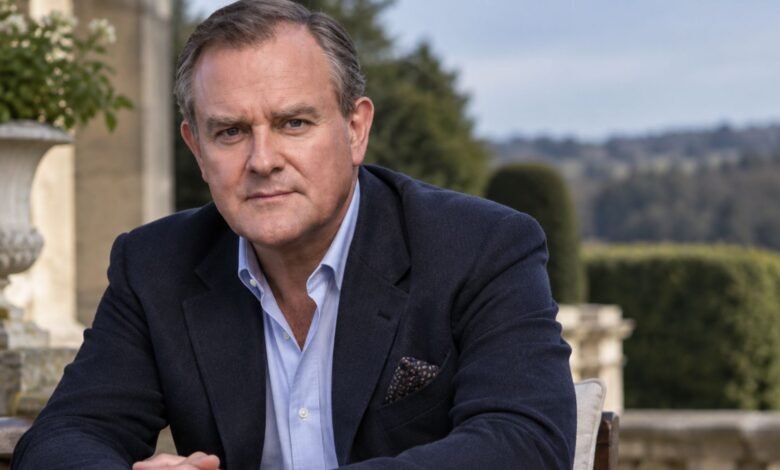
Hugh Bonneville is one of Britain’s best-known actors, recognised internationally for playing Robert Crawley, Earl of Grantham, in Downton Abbey and Mr Brown in the Paddington films. Yet behind those celebrated screen roles was a family in which medicine, public service, discretion and the arts all collided in unexpected ways.=
Searches for “Robert Bonneville”, “Patricia Wright” and “Hugh Bonneville’s parents” can produce a confusing trail of names. The confusion is understandable: Hugh played a character named Robert, while his actual father is identified in biographical references as John Richard Bonniwell. His mother was Patricia, with Patricia McLeish appearing in biographical reference material, not Patricia Wright.
Hugh Bonneville’s parents were a urological surgeon father and a nurse mother: reputable biographical references identify his father as John Richard Bonniwell and his mother as Patricia, with one reference giving Patricia McLeish. The names “Robert Bonneville” and “Patricia Wright” are not supported by the strongest sources reviewed here.
The first correction: “Robert Bonneville” is not the name the record supports
The most important point is simple: Robert Bonneville is not established as Hugh Bonneville’s father in the reliable sources reviewed for this profile.
Hugh Bonneville was born Hugh Richard Bonniwell Williams in Paddington, London, on 10 November 1963. Biographical references identify his father as John Richard Bonniwell, a urological surgeon, and his mother as Patricia, who trained and worked as a nurse before later taking an office job connected with the Foreign Office and MI6.
The name Robert has a particularly obvious alternative explanation. Hugh Bonneville became internationally associated with Robert Crawley, Earl of Grantham, his character in Downton Abbey. His official biography also identifies Robert Crawley as one of his defining roles.
That does not prove how the incorrect parental name originated, but it does explain why a search for “Robert Bonneville” can become tangled with Hugh’s family biography.
The second name is equally significant. The strongest established reporting identifies Hugh’s mother simply as Patricia. One biographical reference gives the fuller name Patricia McLeish. The reputable sources reviewed here do not establish Patricia Wright as her name.
That distinction matters because celebrity-family searches often turn repeated internet claims into apparently settled facts. In this case, the documented record points elsewhere.
Patricia’s two lives: nurse, mother and the MI6 office revelation
Patricia’s story is the more unusual half of Hugh Bonneville’s family history.
Hugh has repeatedly described both of his parents as having trained in the medical environment around St Mary’s Hospital. In a 2017 interview, he said his father was a surgeon and his mother a nurse, while explaining that both had careers connected to medicine before family responsibilities changed the shape of their working lives.
An earlier Independent profile gives more personal context. Hugh described his parents as role models and said his mother stopped nursing after marriage to become a mother, while his father continued his medical career as a surgeon. He remembered them as people who prioritised others and maintained an active social life well into later adulthood.
Then came the detail Hugh did not know for decades.
When he was around 10, Patricia told him she was taking a part-time office job, working three days a week. Hugh initially understood that only as a mother returning to work. Decades later, after she had retired, he recognised the building where she had worked: Century House, near Lambeth North, which had been associated with Britain’s intelligence service MI6.
The discovery became one of the most memorable stories in Hugh’s interviews.
Patricia did not embrace the language of espionage. When Hugh told her, in effect, that she had been a spy, she rejected that description and said she had done filing. She gave him no operational detail, and Hugh said neither he nor his father ever learned exactly what her work involved.
That qualification is essential.
It is fair to say that Hugh reported discovering that his mother had worked in the MI6 environment. It is not justified to turn Patricia into a cinematic secret agent whose duties are known. Hugh himself repeatedly characterised the work as administrative and said she never discussed it.
“My mother never talked about her job.”
Hugh’s recollection, reported in The Guardian, captures the family’s defining attitude towards the subject: discretion came before storytelling.
Patricia Wright or Patricia McLeish? What can actually be established
The surname question deserves its own treatment because it is exactly the kind of detail that gets copied from one biography website to another.
What reputable reporting establishes
| Family detail | What the strongest reviewed sources support |
|---|---|
| Hugh Bonneville’s mother | Patricia |
| Mother’s profession | Nurse |
| Later employment | Office work associated with the Foreign Office/MI6 environment |
| Mother’s surname in one biographical reference | Patricia McLeish |
| “Patricia Wright” | Not supported by the strongest sources reviewed |
| Publicly documented intelligence role | Administrative/filling work described by Hugh; exact duties undisclosed |
The safest editorial formulation is therefore Patricia, or Patricia McLeish where the biographical reference is being specifically cited.
Calling her Patricia Wright would present an unsupported detail as fact.
This is more than a technical correction. Patricia was a private person whose life became publicly interesting largely because of what her son later revealed. That makes evidentiary discipline particularly important.
John Richard Bonniwell: the surgeon at the centre of Hugh’s childhood
Hugh’s father occupies a much quieter place in public reporting than his mother, but his influence appears repeatedly in Hugh’s own memories.
Biographical references identify him as John Richard Bonniwell, a urological surgeon. Interviews with Hugh consistently describe his father more generally as a surgeon or doctor, and Hugh has spoken affectionately about the stories his father invented for him as a child.
Those stories were part of Hugh’s early home life.
In an interview with The London Magazine, Hugh recalled his father making up bedtime tales that repeatedly began with Richmond Park and a fictional family living in a forest. The boy remembered the stories as having the faint smell of hospitals because his father had returned from work.
That small detail is revealing. John’s profession was not simply an occupation in the background of family life; medicine physically entered the household through the routines and smells Hugh remembered from childhood.
Hugh later described his father in more complicated terms as dementia took hold.
His memoir Playing Under the Piano contains substantial reflections on his father’s final years, and Hugh has said that he had not originally intended to write about those experiences. During later interviews, he explained that putting those memories on paper became a way of understanding the influence his parents had exerted over the life he eventually chose.
A review of the memoir in The Washington Post also highlighted the portrait of Hugh’s father as a urologist and piano player, with dementia forming a significant part of the book’s closing emotional material.
John died in 2020 at the age of 93, according to 2026 reporting, after living with dementia.
East Sheen to Blackheath: the family home that fed Hugh’s imagination
The physical setting of Hugh’s childhood helps explain why his parents remain relevant to his biography.
Hugh was born in Paddington, but the family lived first in East Sheen before moving to Blackheath, where his childhood imagination became closely associated with the family home. Hugh has repeatedly described the Blackheath house as an imposing Edwardian property with a central staircase and enough space for a child to transform ordinary domestic architecture into a stage.
He was the youngest of three children, with an older brother and sister. Both siblings were older enough to leave him with stretches of solitary childhood, and Hugh has often connected that solitude with his habit of inventing plays and imaginary worlds.
There was also an artistic influence inside the family that did not necessarily come from professional artists.
John and Patricia were described by Hugh as regular theatre-goers. He remembered being taken to performances and watching his older brother and sister appear in school plays. Their enthusiasm for theatre gave the youngest child access to performance before he had considered it as a career.
That history complicates the familiar story that Hugh simply “became an actor”.
The material he describes from childhood suggests a more gradual progression:
family theatre outings → school performances → elaborate home playacting → National Youth Theatre → professional stage work
Hugh has said that he wrote and staged miniature plays at home and recruited neighbourhood children to participate. The Blackheath house effectively became an improvised theatre long before he made his professional debut.
Three children, one family shaped by duty and discretion
Hugh’s childhood was shared with an older brother and sister, and later interviews have made clear that the three siblings experienced the family in different ways as they grew older.
Hugh has described himself as the youngest, with his brother and sister respectively several years older. When they went away to boarding school, he spent more time alone at home, something he now links to his unusually active imagination.
The family’s ethos appears repeatedly in Hugh’s descriptions of his parents.
He has characterised them as people shaped by duty, service and reserve. In one interview, he described their outlook as rooted in early NHS values, where caring for people and doing the job properly mattered more than self-promotion.
That description is particularly interesting when placed beside the careers of both parents.
Patricia moved from nursing into motherhood and later part-time office work.
John maintained a medical career as a surgeon.
Hugh eventually chose acting, a profession his parents initially regarded with caution.
When he began moving towards professional theatre, Hugh said his parents were “guardedly supportive” rather than immediately enthusiastic. His father’s profession made the contrast especially clear: medicine offered an established professional identity, while acting appeared far less predictable.
Hugh has recalled his parents discouraging showing off and favouring modesty and service. Those values formed part of the psychological atmosphere in which an aspiring actor had to prove that performance could become a serious occupation.
From a surgeon’s household to the National Theatre
The eventual distance between Hugh’s upbringing and his public career is striking.
He studied theology at Corpus Christi College, Cambridge, then trained at the Webber Douglas Academy of Dramatic Art. His professional stage career began in the mid-1980s, followed by work with the National Theatre and Royal Shakespeare Company
Yet Hugh’s own account of his development points repeatedly back to his family.
His father gave him stories.
His mother encouraged action and service while maintaining a highly private working life.
His parents took him to theatres.
His older siblings performed.
The family house became a stage.
None of this proves that his parents “caused” his acting career. Hugh himself has presented the story more naturally: the ingredients were there early, and eventually acting became difficult for him to ignore.
The irony is that one parent worked in surgery and the other in nursing, while their youngest child eventually built a career around pretending to be other people.
Medicine dealt in the body.
Hugh’s profession dealt in character.
Both required preparation, discipline and an audience of some kind.
Why Hugh’s memoir brought his parents back into focus
Playing Under the Piano: From Downton to Darkest Peru, published in 2022, changed the amount of publicly available material about Hugh’s family.
Rather than being a conventional career autobiography, the book contains recollections about childhood, theatre, famous colleagues and his parents’ later years. Hugh’s official website describes the memoir as a collection of stories about his life as an actor, including the previously unknown details about his mother’s connection to the secret service and his father’s dementia.
Hugh has said the family material emerged somewhat unexpectedly while writing.
In an interview with The Saint, he explained that he initially intended to write connected stories about his professional life but found himself writing about his father’s dementia and other family experiences. He said he later understood the book partly as a thank-you note to his parents and to the industry in which he had worked.
That helps explain why Patricia and John appear so often in later profiles.
They are not famous because of conventional celebrity achievements.
They became part of the public record because their son chose to write and speak about the values, memories and losses that shaped him.
A chronology of the Bonneville family story
| Period | Family detail supported by the public record |
|---|---|
| Hugh’s childhood | Hugh was raised in London as the youngest of three children; his father was a surgeon and his mother a nurse. |
| East Sheen years | The family lived in East Sheen before moving to Blackheath. |
| Blackheath childhood | Hugh developed elaborate home performances and remembered the family’s theatre-going culture. |
| Around age 10 | Patricia began a three-day-a-week office job, which Hugh initially understood simply as her returning to work. |
| Decades later | Hugh discovered that his mother’s old office was in Century House, then associated with MI6. |
| 1980s | Hugh moved into professional theatre after Cambridge and drama-school training. |
| 2014 | Recent reporting places Patricia’s death at age 85 in 2014. |
| 2016 | Hugh publicly discussed discovering his mother’s MI6 connection after her death. |
| 2020 | John died aged 93 after living with dementia. |
| 2022 | Hugh published Playing Under the Piano, bringing extensive family memories into his public biography. |
There is a minor date inconsistency in some secondary material concerning Patricia’s death. An older article reproduced on Hugh’s site says 2015, while later established reporting and Hugh’s 2016 account place her death in 2014. The latter chronology is the more consistently supported record and is therefore used here.
Financial Trajectory: What is—and isn’t—publicly documented
There is no authoritative public financial record establishing the personal net worth, investments, property portfolio or lifetime earnings of John Richard Bonniwell or Patricia.
The available reporting focuses on their professions, family, later years and Hugh’s recollections. It does not provide audited wealth figures, estate valuations or reliable asset disclosures.
That makes precise online estimates inappropriate.
For Hugh himself, commercial celebrity websites frequently publish numerical net-worth figures, but those estimates are generally not accompanied by audited statements or complete financial documentation. This article therefore does not convert third-party estimates into fact.
For his parents, the evidence is even thinner.
| Financial detail | Verified public evidence |
|---|---|
| John Richard Bonniwell’s net worth | Not publicly established |
| Patricia’s net worth | Not publicly established |
| Family estate value | Not publicly established |
| Property portfolio | Not reliably documented |
| Professional earnings | Not publicly documented in authoritative figures |
The financially responsible answer is therefore the least dramatic one: no authoritative figure has been established.
The family names behind Hugh Bonneville’s most common searches
The public record can be reduced to a straightforward identity map:
| Search term | Evidence-based identification |
|---|---|
| Hugh Bonneville | British actor, born Hugh Richard Bonniwell Williams |
| Hugh Bonneville’s father | John Richard Bonniwell, generally identified as a urological surgeon |
| Hugh Bonneville’s mother | Patricia; one biographical reference gives Patricia McLeish |
| Hugh Bonneville’s parents | John Richard Bonniwell and Patricia |
| Robert Bonneville | Not established as Hugh’s father in the strongest reviewed sources |
| Patricia Wright | Not established as Hugh’s mother in the strongest reviewed sources |
| Robert Crawley | Hugh Bonneville’s Downton Abbey character |
| Patricia’s MI6 connection | Hugh said he discovered her office was associated with MI6; she described her work as filing |
That final distinction is especially important for searchers looking for “Robert Bonneville”. Robert Crawley is real within the Downton Abbey story; John Richard Bonniwell is the name associated with Hugh Bonneville’s real-life father in biographical references.
Six questions people keep asking about Hugh Bonneville’s parents
Who was Hugh Bonneville’s father?
Hugh Bonneville’s father was John Richard Bonniwell, a urological surgeon according to biographical reference material. Established interviews consistently describe Hugh’s father as a surgeon, and Hugh has recalled his medical career, his storytelling at bedtime and his later years living with dementia. John died in 2020 at the age of 93.
Who was Hugh Bonneville’s mother?
Hugh Bonneville’s mother was Patricia, a trained nurse. Biographical reference material gives her as Patricia McLeish, while major interviews generally refer to her simply as Patricia. She later worked in an office associated with the Foreign Office and MI6, although she told Hugh that she had done filing and never presented herself as a spy.
Was Hugh Bonneville’s mother really a spy?
Hugh Bonneville has never established that his mother was a field spy. He discovered decades after she began the job that her office was in Century House, a building associated with MI6. When he confronted her, Patricia said she had done filing and declined to provide further information. Hugh later described himself as proud of her discretion and service.
Was Hugh Bonneville’s father called Robert Bonneville?
The strongest reviewed sources do not support that identification. Biographical reference material gives Hugh’s father as John Richard Bonniwell, while Hugh is famously associated with the fictional character Robert Crawley, Earl of Grantham, in Downton Abbey. “Robert Bonneville” appears to be a mistaken or conflated search term rather than a documented parental identity.
Was Hugh Bonneville’s mother Patricia Wright?
The reliable sources reviewed for this article identify Hugh’s mother as Patricia and one biographical reference gives the surname McLeish. No strong source reviewed here identifies her as Patricia Wright. The Wright name should therefore not be presented as established fact in a biography of Hugh Bonneville.
How did Hugh Bonneville’s parents influence his career?
Hugh has explicitly connected his upbringing with his parents’ influence. They took him to theatre, supported the children’s performances and created a home where storytelling and imagination were encouraged, even though they initially approached acting cautiously. Hugh later described his memoir as partly a recognition of the influence his parents had on the path he chose.
Related family biographies from Deeply News
For readers researching the families behind well-known British and international performers, related biographies include:
Alfie Oldman — Gary Oldman’s son and film-industry career
The parents behind the actor were never as mysterious as the internet makes them
Hugh Bonneville’s family history does contain a genuine mystery, but it is not the mystery suggested by the names “Robert Bonneville” and “Patricia Wright”.
The stronger record is both more ordinary and more compelling.
His father, John Richard Bonniwell, was a surgeon. His mother, Patricia, was a nurse who later took administrative work and whose connection with an MI6 building remained unknown to her son for decades. They raised three children in London, took an interest in theatre, and gave Hugh the domestic setting in which his imagination could develop.
Patricia’s story ended with a question Hugh could never fully answer: what exactly had she done?
John’s story ended with another kind of uncertainty, as dementia gradually altered the father Hugh remembered from childhood.
Both stories eventually became part of Hugh’s own memoir and public reflections.
That is why the most accurate answer to “Who are Hugh Bonneville’s parents?” is also the simplest: John Richard Bonniwell and Patricia. The rest of the story is about the professions they chose, the discretion they maintained, the family they raised and the influence Hugh says they had on the actor he became.
Editorial Disclaimer
This article distinguishes documented facts from uncertain or repeated online claims. Hugh Bonneville’s parents were private individuals, and several aspects of their lives—including Patricia’s precise role connected with MI6 and the family’s financial affairs—remain incompletely documented in authoritative public sources. No unsupported net-worth figure, private address, undisclosed occupation or speculative family detail has been presented as fact.